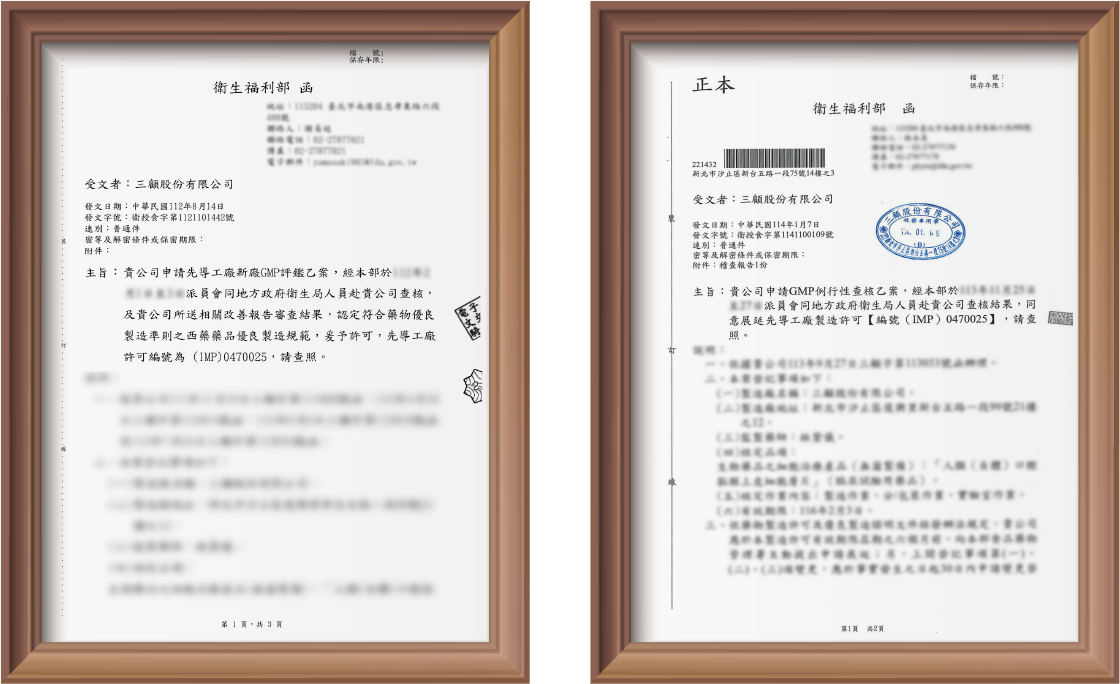
Quality Certification
Challenging the Highest Standards, Building Trust from the Start
GMP (Good Manufacturing Practice) is an internationally recognized regulatory framework designed to ensure product quality and safety. It emphasizes standardized manufacturing processes and consistent control, and is widely applied in high-risk fields such as pharmaceuticals, biologics, and cell therapies.
Under the GMP system, every manufacturing step and every production batch must follow clearly defined Standard Operating Procedures (SOPs). Through rigorous quality management and comprehensive documentation, GMP ensures full traceability, consistency, and process stability.
Key GMP requirements include:
-
Controlled and monitored production environments, such as cleanroom and aseptic area management
-
Batch records and fully traceable, documented workflows
-
Raw material qualification, equipment calibration, process validation, and product release criteria
-
Preventive design against contamination and cross-contamination
-
Personnel training, SOP implementation, and continuous improvement mechanisms
GMP vs. GTP
In contrast, GTP (Good Tissue Practice) focuses primarily on hygiene control and disease risk management during the collection, processing, and storage of cells and tissues. Its regulatory requirements are comparatively more flexible, allowing institutions to operate according to their specific conditions and operational capacities.
| Item | GMP(Good Manufacturing Practice) | GTP(Good Tissue Practice) |
| Regulatory Objective | Ensures overall product quality and safety; minimizes manufacturing risks through standardized and controlled processes | Focuses on hygiene control and contamination and infection risk management during tissue and cell handling. |
| Scope of Regulation |
Covers the entire manufacturing lifecycle: raw materials, production, quality control, packaging, storage, and product release |
Primarily limited to tissue and cell collection, processing, and storage |
| Regulatory Stringency | Highly stringent, governed by international standards such as FDA 21 CFR Parts 210/211, EU GMP, and PIC/S | Comparatively flexible, regulated mainly under FDA 21 CFR Part 1271 |
| Quality & Risk Control Requirements | Requires full QA/QC systems, process validation, risk assessment, deviation management, and CAPA mechanisms | Emphasizes aseptic handling, contamination prevention, and infection control |
| Documentation & Traceability Period | Long-term record retention required (EU GMP mandates up to 30 years) | Shorter retention period (FDA requires approximately 10 years) |
| Audit & Verification Methods | On-site inspections, batch record review, full process traceability, and regulatory audits | Documentation review and compliance checks on labeling and handling procedures |
Pharmaceutical-grade quality—safeguarding health at every stage.