iPSC Storage Service
Store Hope. Secure Health.
What is iPSCs?
iPSC (Induced Pluripotent Stem Cells) is a cellular reprogramming technology developed by Professor Shinya Yamanaka of Kyoto University in 2006. In 2012, this breakthrough was recognized with the Nobel Prize in Physiology or Medicine, ushering in a new era of regenerative medicine worldwide.
This technology can “reverse” mature human somatic cells into a stem cell state with multilineage differentiation potential, enabling them to differentiate into various cell types such as cardiac, neural, hepatic, and muscle cells.
With the advantages of an autologous origin, high compatibility, and a low risk of immune rejection, iPSCs have become a key foundation for regenerative medicine, personalized medicine, drug development, and disease modeling.
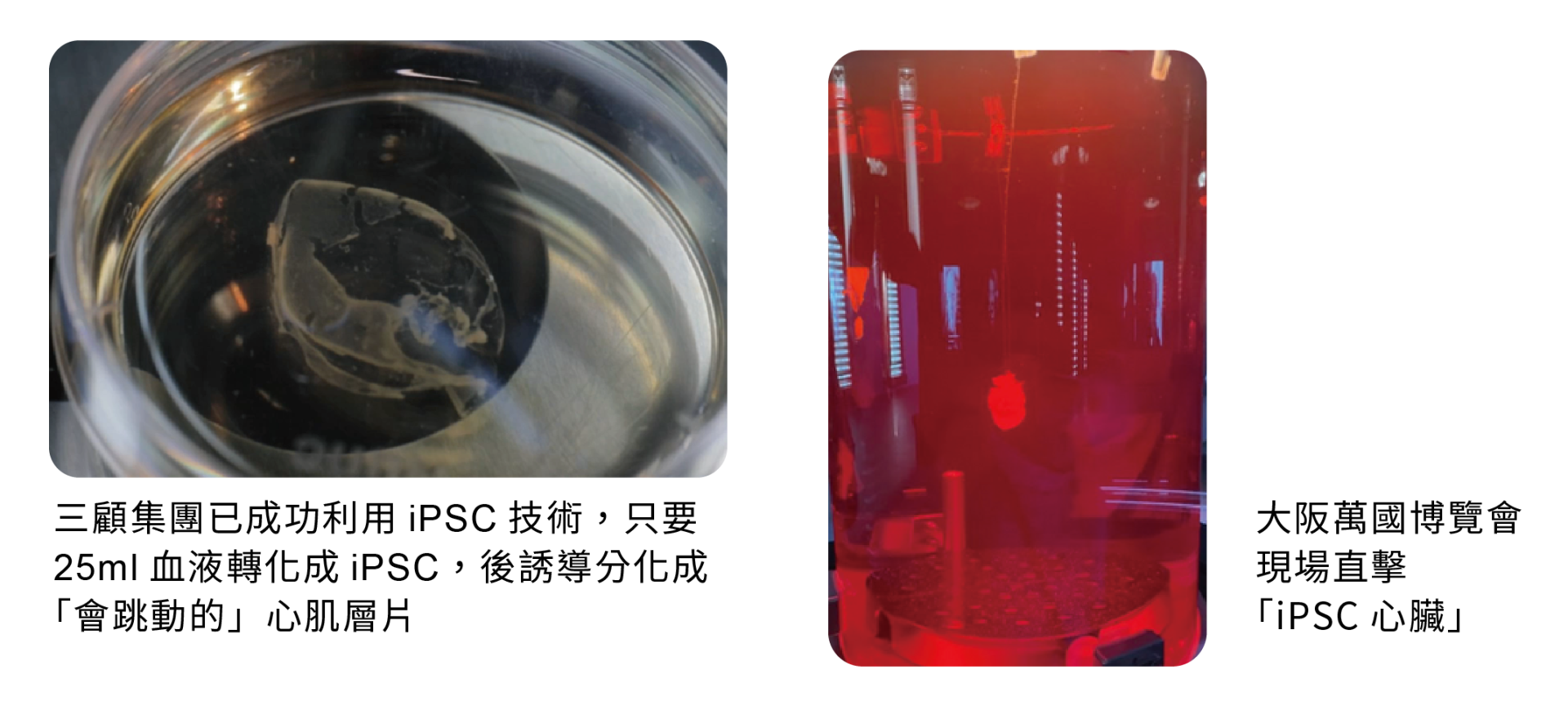
The MetaTech Group has obtained a global license from iPS Academia Japan under Kyoto University, becoming an international partner legally authorized to use iPSC technology for commercial development and clinical applications. In addition, the MetaTech team has successfully generated beating cardiac cell sheets from blood-derived iPSCs. In 2024, the company further created a cardiac cell sheet using blood from its iPSC Ambassador, Quinlivan, symbolizing a new era in which regenerative medicine is moving toward broader public accessibility.
Why Store iPSCs?
As global healthcare moves toward a dual-track future of regenerative medicine × personalized medicine, banking autologous iPSCs is no longer merely an option—it is a proactive strategy for the coming era of cell therapy.
It serves not only as a personal health backup, but also as a valuable long-term medical asset for future planning.
Who Should Store iPSCs?
With the implementation of the Regenerative Medicine Act and Taiwan’s Special Regulation for Cell Therapy (officially: Regulations Governing the Implementation or Use of Specific Medical Techniques, Examinations, Tests, and Medical Devices), cell therapy has officially entered the clinical development and adoption stage.
In this new era of cell therapy, we recommend that everyone consider banking their own iPSCs as a way to build proactive health security in advance.
Currently, iPSCs can be customized from multiple sources, including:
-
25 mL of peripheral blood
-
Newborn cord blood
-
Fibroblasts
-
Previously cryopreserved cell vials (cord blood, umbilical cord mesenchymal stem cells, fibroblasts for re-banking)
These cell samples can be reprogrammed into highly plastic, regenerative iPSC stem cells, becoming a key health asset for future personalized medicine, preventive health planning, and disease treatment.
The Four Core Values
-
High-Stability Cell Preservation
iPSCs offer long-term expansion and stable replication capacity—like “ageless cells.” With quality preserved across generations as pristine as the first, they plant the seeds for future cell therapy within the family. -
Complete Preservation of Genetic Lineage Information
By establishing family-based cell models, iPSCs can replicate inherited traits to support disease risk prediction and next-generation health management, while also enabling drug screening platforms.
-
Personalized iPSC Exosomes
“Self-exosomes” secreted by iPSCs (exosomes derived from an individual’s own iPSCs) are rich in regenerative and anti-aging signals. With high personalization and strong regenerative potential, they can be incorporated—under physician evaluation—into customized long-term storage and application plans. -
Differentiation Potential Comparable to Embryonic Stem Cells
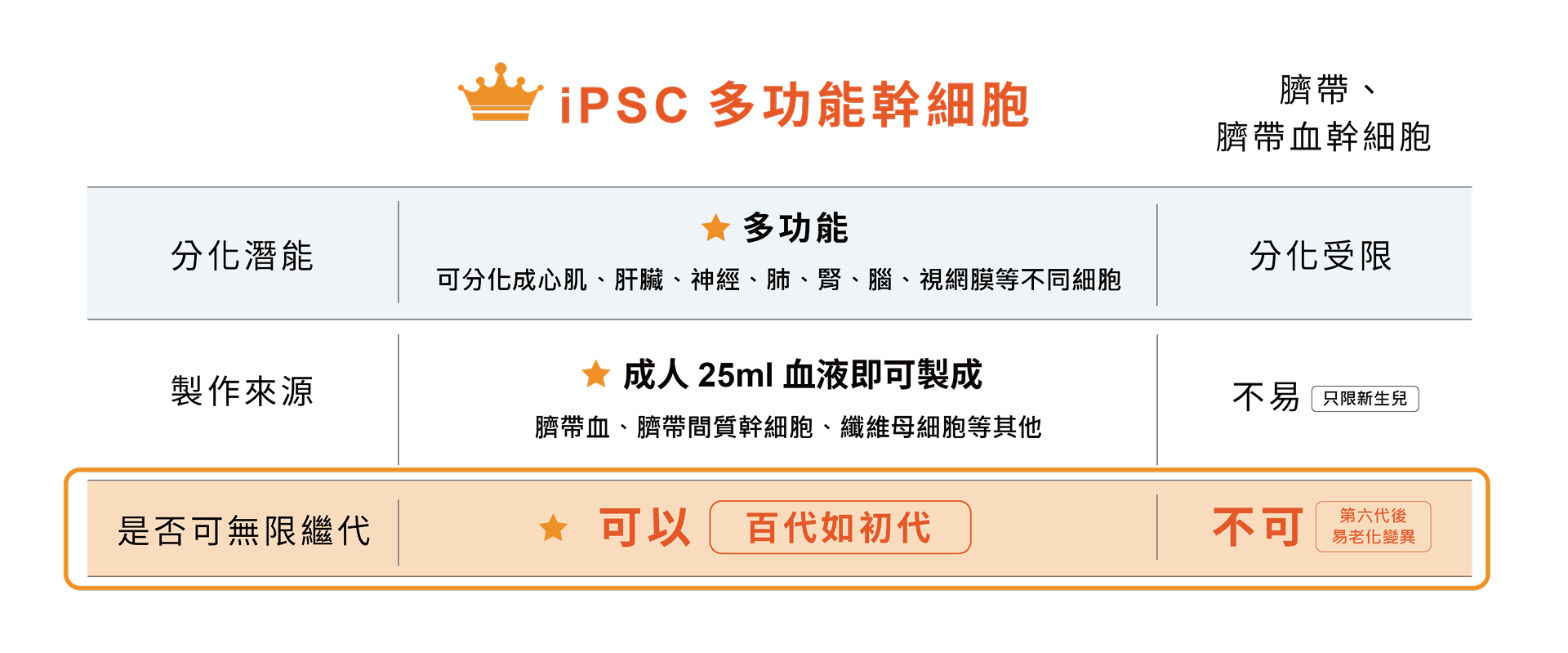
儲存iPSC與 臍帶、臍帶血幹細胞 有何不同?
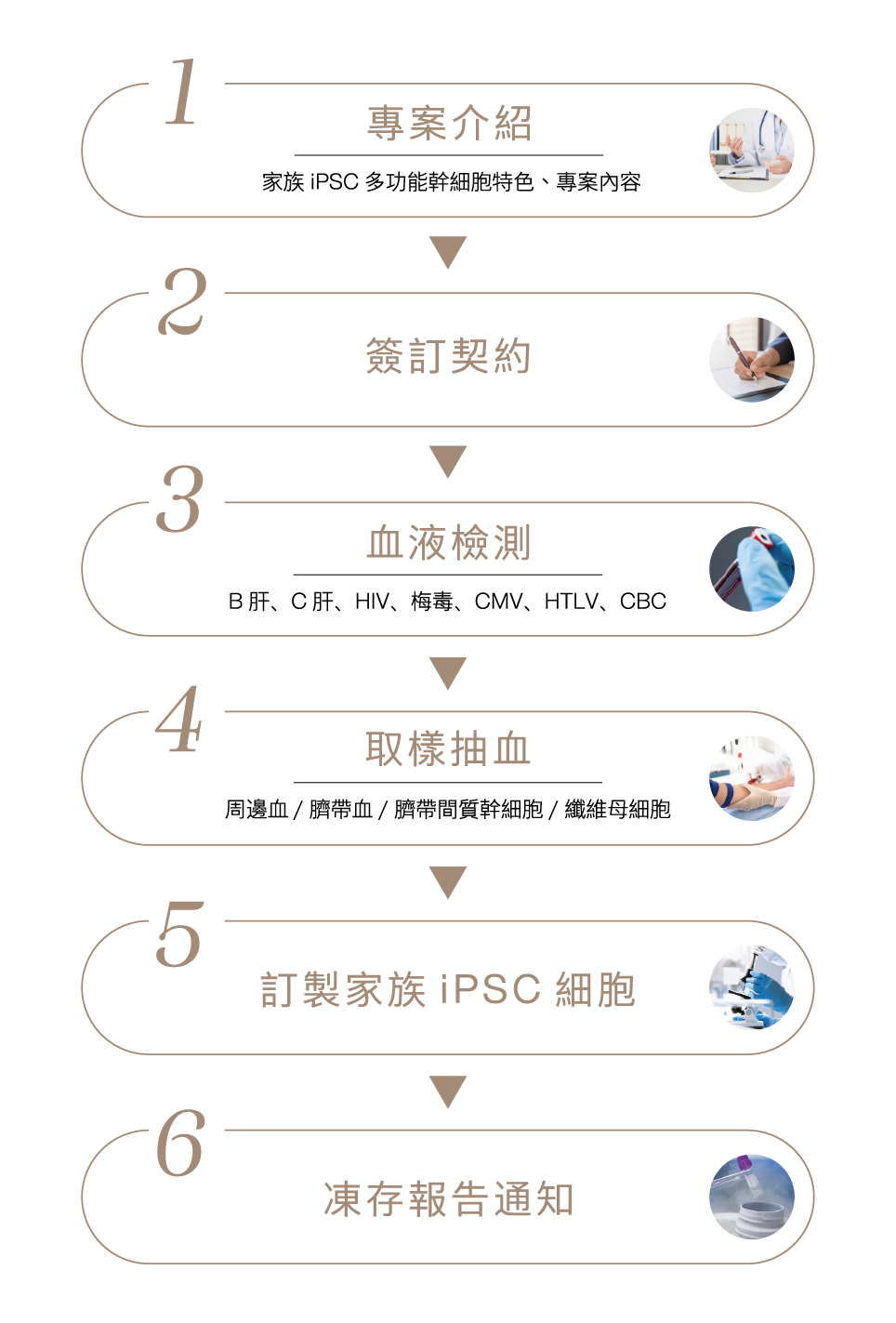
儲存訂製-流程 一覽